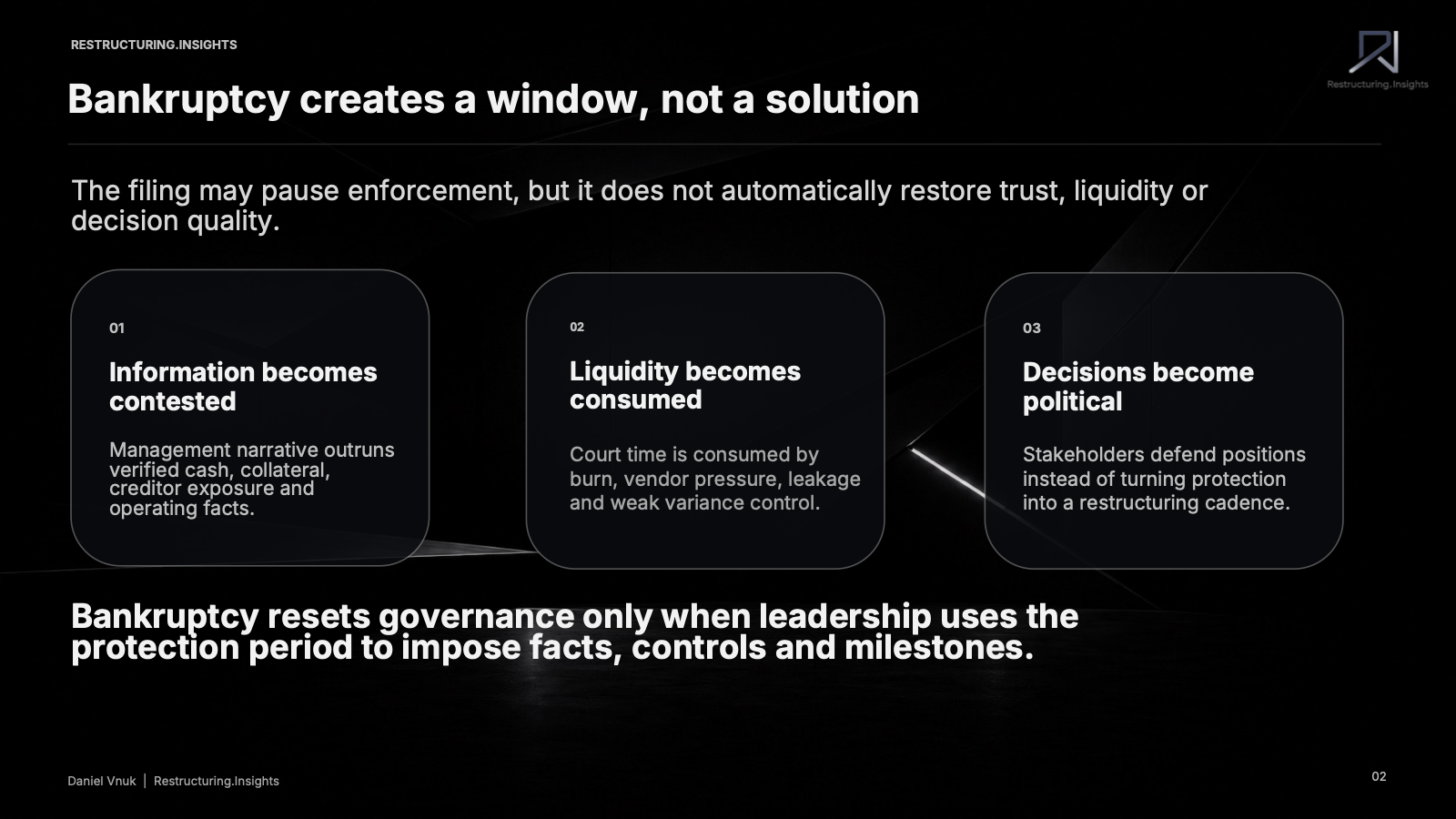
A bankruptcy process may stop enforcement pressure. It may create breathing space. It may impose legal structure around creditors, debtors and stakeholders.
But it does not automatically create recovery.
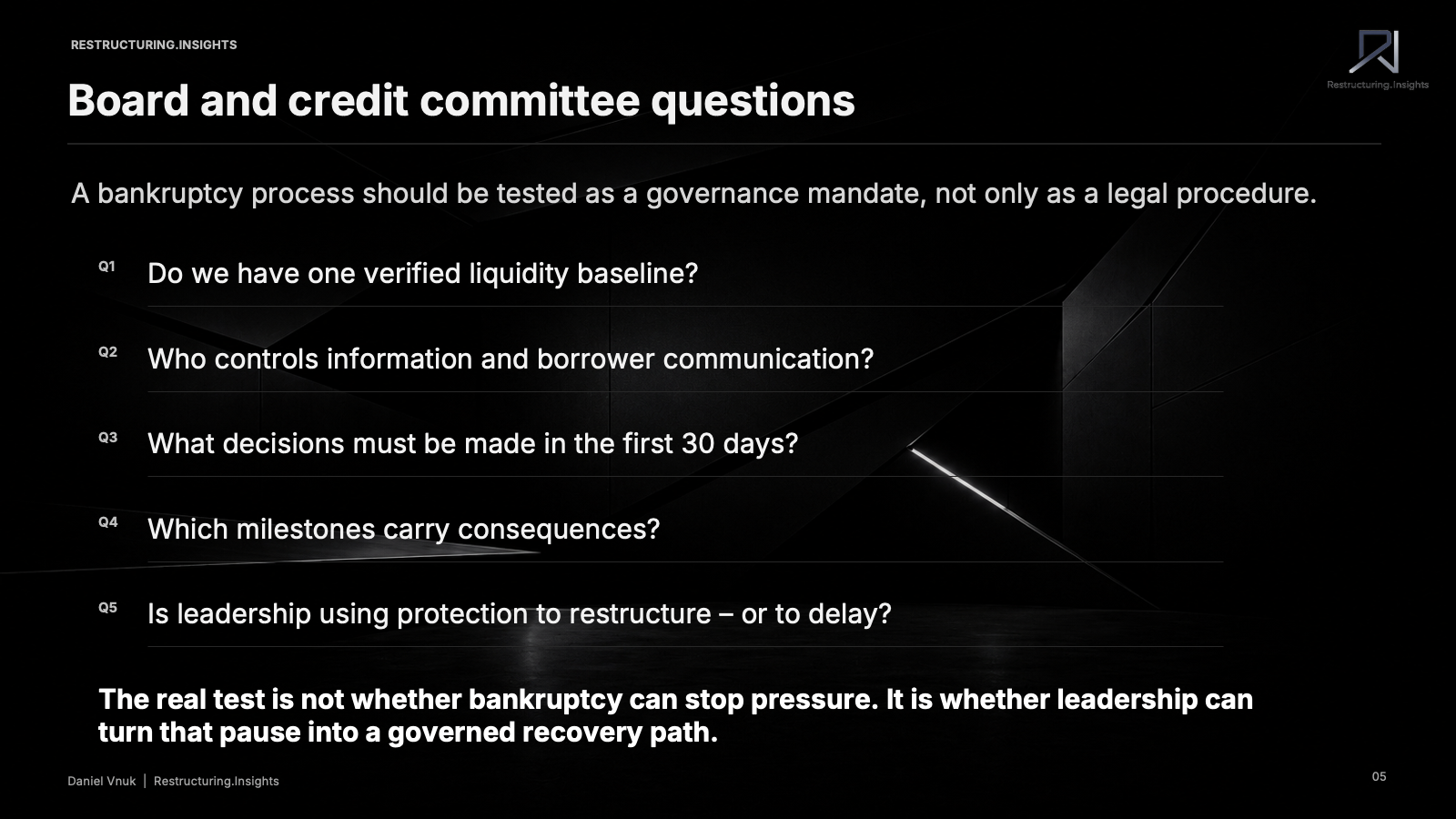
The real question is what leadership does with the protection period.
In distressed situations, bankruptcy is often treated as a legal event. In practice, it is also a governance test. It reveals whether the company can operate with discipline when liquidity is constrained, trust is damaged, information is scrutinized, and every decision has consequences.
Court protection may buy time. But time alone has no value if the business continues to burn cash, reporting remains weak, creditors receive inconsistent messages, and management uses the process to delay rather than decide.
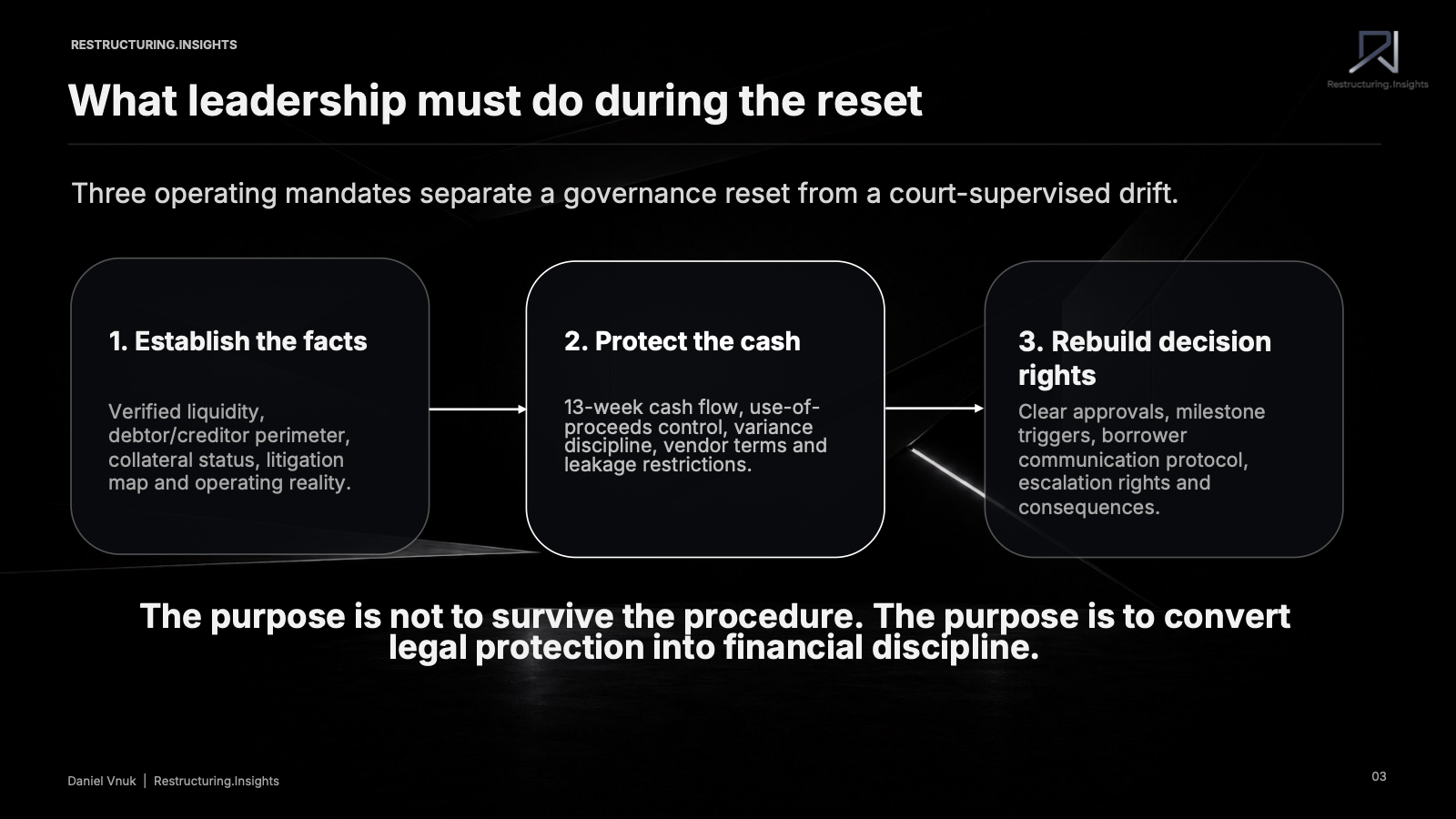
A real governance reset requires three things.
First, verified facts. Leadership must establish a reliable view of liquidity, creditor perimeter, collateral position, key contracts, litigation exposure, operational viability and short-term cash needs.
Second, cash discipline. A bankruptcy process without strict cash control becomes an expensive holding pattern. Weekly cash reporting, variance analysis, use-of-proceeds discipline and leakage control are not administrative details. They are survival tools.
Third, decision rights. Someone must have authority to make difficult decisions quickly: supplier terms, asset sales, cost reduction, creditor communication, restructuring milestones and management accountability.
Bankruptcy can create the framework. Leadership must create the discipline.
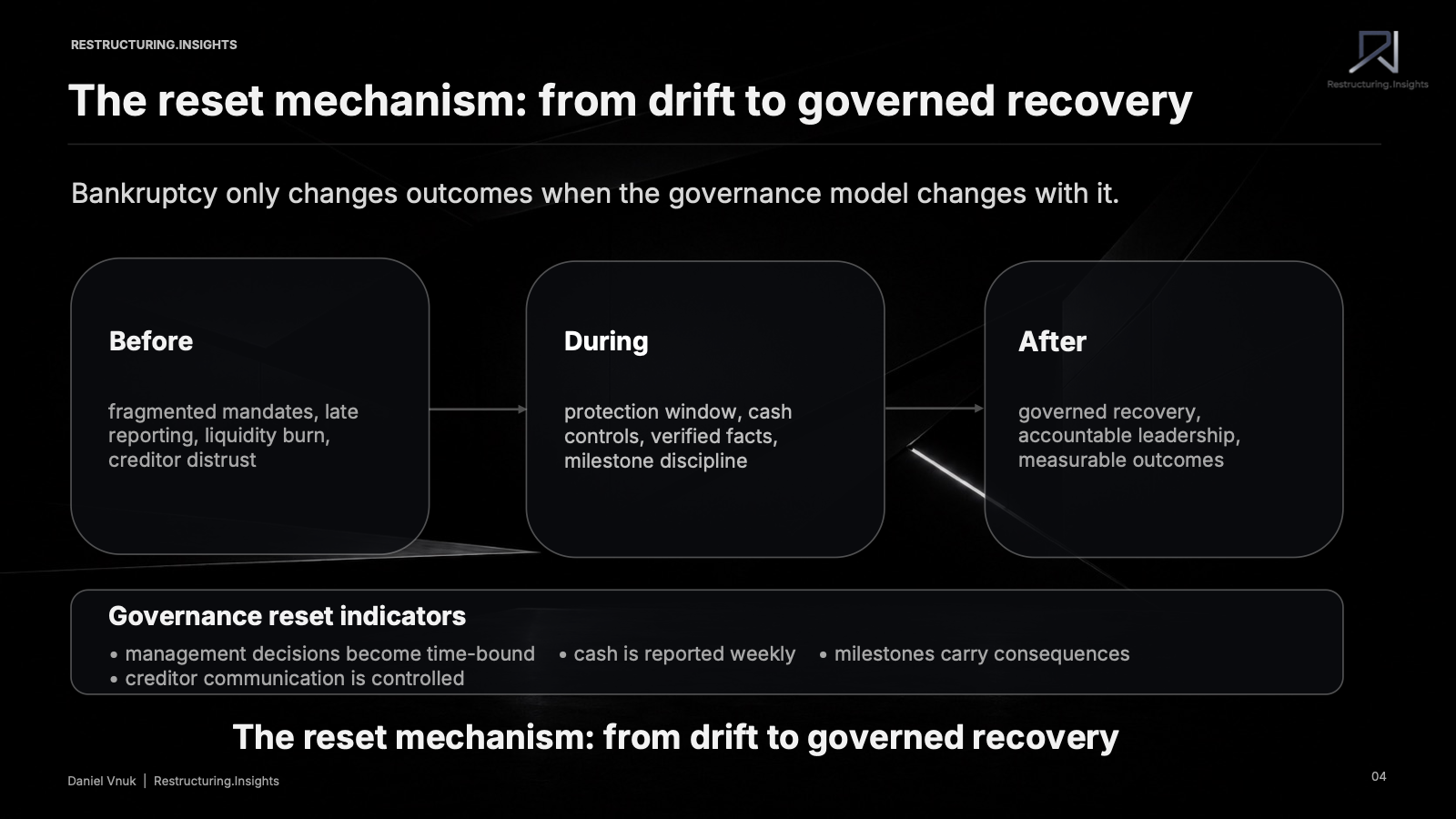
The strongest restructuring outcomes are rarely produced by legal protection alone. They are produced when legal protection is converted into governance, liquidity control and execution.
The real test is not whether bankruptcy can pause pressure.
The real test is whether leadership can turn that pause into a governed recovery path.
Daniel Vnuk, MEcon, MBA